Monday, September 12, 2016
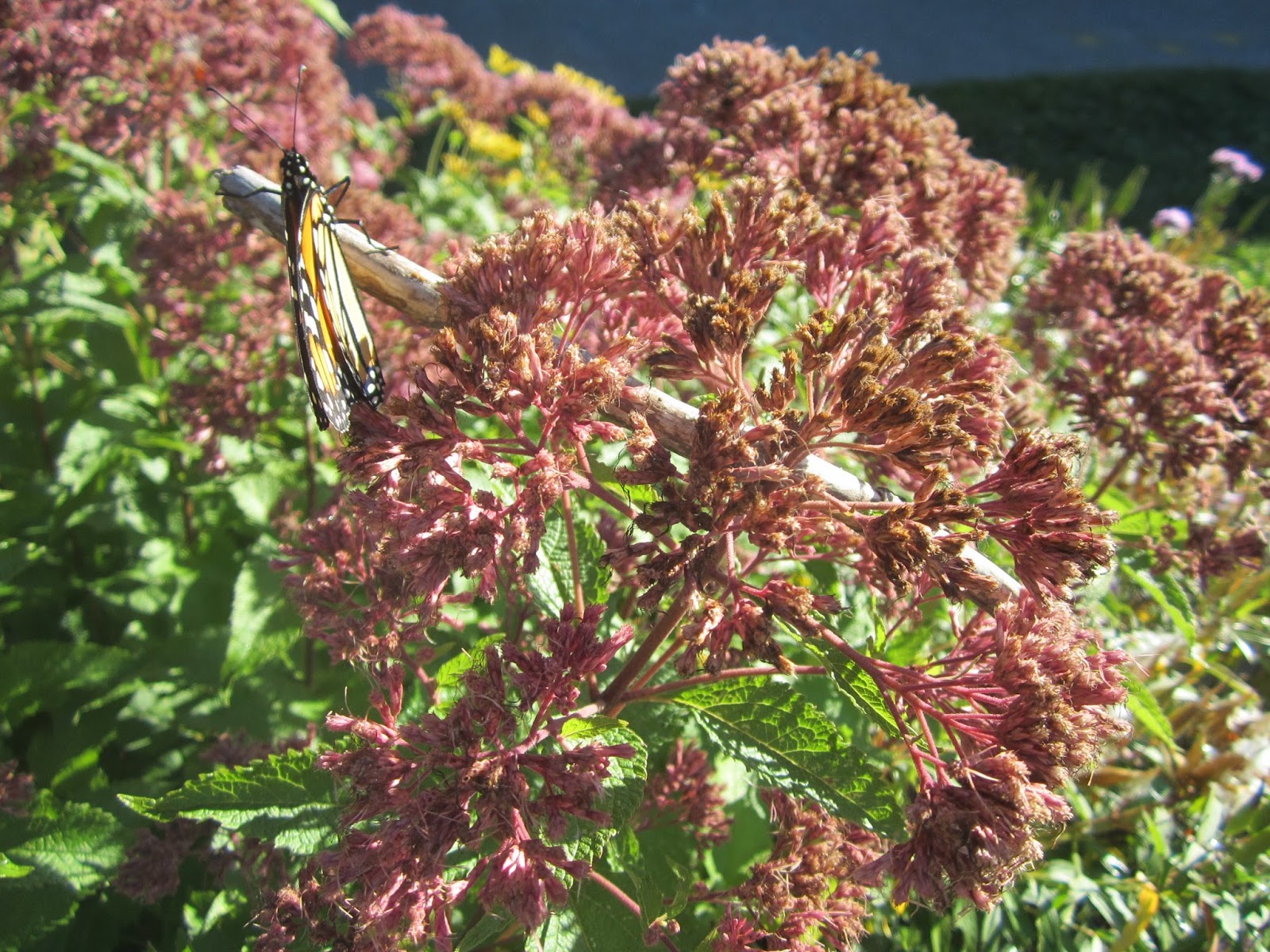
We had an exciting morning on Monday as all of our butterflies emerged from their chrysalises. Before we released them we talked about things they (and all living things) would need to survive. We noted that while we could provide them with water and air, eventually it would be hard to supply them with nectar (food), and certainly the space we had for them as caterpillars is no longer adequate once they are butterflies. We wished them well and set them free on a beautiful morning to begin their journey south.
Friday, September 9, 2016
During our first two weeks of school much of our focus has been on developing a warm and caring classroom community in which all children feel safe and welcome, feelings essential for learning. For young children, a critical first step in this process is helping them develop an awareness of their own feelings and emotions. This week we have been talking about the Zones of Regulation, four categories or "zones" used to categorize different emotions people experience: blue, green, yellow, and red. Green is optimum. People in the green zone might be feeling happy, calm, or focused. Blue is running slow-perhaps tired, sick, or sad. Yellow represents caution-frustrated, overwhelmed, silly, worried, or anxious. Finally the red zone is for extreme emotions and feeling out of control- terrified, angry, or completely overwhelmed. To help us practice identifying the zones we read the book "On Monday When It Rained..." by Cherryl Kachenmeister, which describes the range of feelings for one boy in a given week, and emphasizes that all people, even adults, cycle through various emotions every day. We brainstormed strategies for moving toward the green zone when we aren't feeling our best. Some of our ideas include taking deep breaths, finding a space by ourselves, counting to five (or higher), or sitting with a drip toy.
We also read the book "Have You Filled a Bucket Today" by Carol McCloud, which talks about the rewards of treating other people with kindness. When you fill someone else's bucket your own bucket fills as well. In the coming days we will be paying close attention to the particular acts that fill our buckets each day.
Wednesday, September 7, 2016
We had a wonderful first day of ECO. Much of our focus was on establishing ECO routines and boundaries and getting to know our space in the forest. It was a bit warm for a walk back but everyone did a terrific job! Thank you for your help with sending children well prepared. (And thanks to Katie Babic and Kasara Gage for sharing the photos.)
We begin our ECO mornings in the field, singing a song together, sharing something that we are thankful for, and playing a game. Then we head into the forest.
When we arrive at our space in the woods we gather around the safety circle. We often share interesting things we noticed on our walk, and as the seasons progress, changes we see in our surroundings. Today some of the things we noticed were crickets chirping, a chickadee singing, some places where the tall grass was trampled, a spider in its web, and a toad. Next it is time for snack and a story.
When everyone has finished snack we move into our guided exploration for the morning. This is the part of our routine that typically changes each week. Today children worked with a partner exploring our space and collecting three 3-4 interesting things that could fit in a paper bag.
We decided that when it comes to living things we will try to to treat them the way they would want to be treated and we will observe them with our eyes, but not pick them up.
After each group collected their objects we gathered back in the circle. Rather than looking at what each group collected, we took a few moments to pass the bags and notice the objects with our hands. Tomorrow we will empty each bag to see what was found.
Finally we ended our morning by sitting quietly in a space by ourselves for a couple of minutes, noticing how different the forest is when we are all quiet. In the coming weeks each child will choose a sit spot for this purpose, to be revisited during each ECO session throughout the year.
We end by saying goodbye to the forest and then walking back to school.
Thursday, September 1, 2016
We have had a fantastic first few days of school. Much of our time has been spent establishing routines and getting a sense of the rhythm of our days. Your children have been wonderful listeners as they have learned many new routines from what to do upon arrival in the morning, to how to flow through math stations, playground expectations, and the different structure of each special. There is a whole lot of new information.
After arrival and a short choice time, each day we come together for morning meeting. We begin our meeting by sitting quietly for about 45 seconds. This is followed by a greeting, for now done by passing a talking stick around the circle as we greet each other. This helps us learn everyone's name and also gives good practice in greeting classmates in a way that makes everyone feel welcome and safe. After the greeting we have a short group activity. This will take many forms throughout the year, but this week we have been doing "Pop See Ko". Ask your child to demonstrate this for you!
After the activity we read the morning message which gives a sense of the schedule for the day and also helps to develop literacy skills. This week we have been searching for specific letters and numbers in the message. Soon we will add a sharing component to the meeting, but for now we are sharing artifact bags a bit later in the morning.
I will continue to give you details about each part of our day and will include pictures, which make the posts far more interesting. (I can't post kid's pictures without consent forms- thank you if you've already sent this in- I appreciate that there is a lot of paper work in the first week.)
Instead, here is a picture of one of the week's highlights, our caterpillars, which have grown and changed rapidly. On Wednesday as I was reading a book about caterpillars a child glanced up at our butterfly house and noticed that one of them was transforming into a chrysalis. We quietly gathered around and watched the process unfold.
After arrival and a short choice time, each day we come together for morning meeting. We begin our meeting by sitting quietly for about 45 seconds. This is followed by a greeting, for now done by passing a talking stick around the circle as we greet each other. This helps us learn everyone's name and also gives good practice in greeting classmates in a way that makes everyone feel welcome and safe. After the greeting we have a short group activity. This will take many forms throughout the year, but this week we have been doing "Pop See Ko". Ask your child to demonstrate this for you!
After the activity we read the morning message which gives a sense of the schedule for the day and also helps to develop literacy skills. This week we have been searching for specific letters and numbers in the message. Soon we will add a sharing component to the meeting, but for now we are sharing artifact bags a bit later in the morning.
I will continue to give you details about each part of our day and will include pictures, which make the posts far more interesting. (I can't post kid's pictures without consent forms- thank you if you've already sent this in- I appreciate that there is a lot of paper work in the first week.)
Instead, here is a picture of one of the week's highlights, our caterpillars, which have grown and changed rapidly. On Wednesday as I was reading a book about caterpillars a child glanced up at our butterfly house and noticed that one of them was transforming into a chrysalis. We quietly gathered around and watched the process unfold.
Wednesday, June 1, 2016
Despite not having ECO we had a very science themed day on Wednesday. We began the day in two groups, with half of the class looking for birds around the school yard with Zac and the other half exploring in the stream on the north side of the school with me. We had to have really good eyes to find living things in the stream, but children did find a nice variety of creatures including water bugs, worms, a caterpillar, slugs, and what appeared to be a teeny tiny tadpole. It was also nice to just spend time exploring and playing in and around the water. Around the school yard children observed robins, yellow warblers, and a common grackle and heard a veery thrush, one of the most unique bird songs.
Later in the morning we spent time exploring some of the unique properties of water and how water behaves on different surfaces. Some observations included water drops on tinfoil flatten out, while on wax paper they are perfectly round. Children also noticed that two water drops that are really close together will suddenly join to make one drop.
Finally we ended the day learning a bit about barn owls and dissecting owl pellets. This was a huge hit!
Later in the morning we spent time exploring some of the unique properties of water and how water behaves on different surfaces. Some observations included water drops on tinfoil flatten out, while on wax paper they are perfectly round. Children also noticed that two water drops that are really close together will suddenly join to make one drop.
Friday, May 27, 2016
Friday, May 20, 2016
This week children engaged in a science exploration centered on bird beaks. Our focus question was "Which beak works best for different kinds of food?" We began by looking at pictures of various birds, describing their beaks, and contemplating what kind of food each beak might be suited for eating. Children were then given a variety of bird foods and asked to use their imaginations a bit (pirate booty as crunchy grasshoppers, mini marshmallows as caterpillars). Using five different "beaks" they tested each food, deciding which beak worked best for each food. In our follow up discussion children noted that the best beak is really dependent on the kind of food- a straw like beak is great for nectar, but not much else, and spoon like beaks were challenging for us, but birds like pelicans use these beaks to scoop fish from water where they probably work quite well.
Subscribe to:
Posts (Atom)